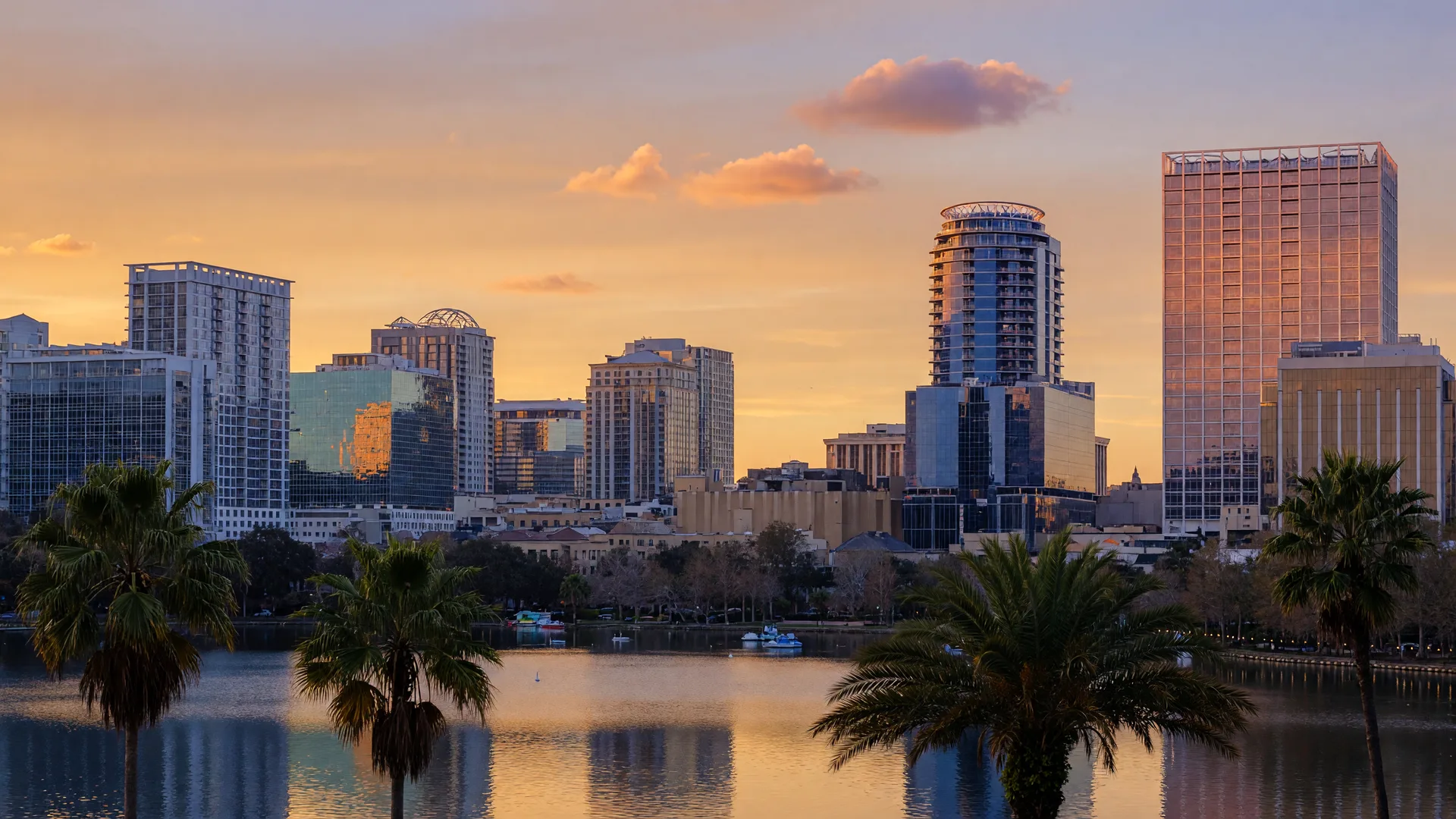
Introduction: Why This Guide Exists
Moving to a new city is one of the biggest decisions you can make. Orlando is more than theme parks and tourist attractions. It is a growing metropolitan region of over 2.7 million people spread across five counties, each with its own character, housing options, commute patterns, and lifestyle. This guide covers everything you need to know to make an informed decision about relocating to Greater Orlando and Central Florida.
My name is Tyler Gibson. I am a Central Florida real estate advisor and investor, and I have helped hundreds of families relocate to the Orlando area through my team at LPT Realty. I moved to Orlando myself in 2012, so I understand the process from both a professional and personal perspective. This guide reflects what I have learned helping buyers from across the country (and around the world) find the right place to call home in Central Florida.
Throughout this guide, you will find links to deeper resources on specific topics. This page works best as a starting point -- read the sections most relevant to your situation, then follow the links to dive deeper.
Why Move to Orlando?
What makes Orlando a top relocation destination?
People move to Orlando for many different reasons, and the region's broad appeal is one of its strengths. Here are the most common factors driving relocation to Central Florida:
- No state income tax: Florida is one of the few states with no personal state income tax. For relocators from high-tax states like New York, California, or Illinois, this can mean thousands of dollars in annual savings.
- Strong job market: Orlando's economy has grown consistently over the past decade. Major employment sectors include tourism and hospitality, healthcare (Orlando Health, AdventHealth), technology and simulation (particularly in the Lake Nona and Research Park areas), aerospace and defense, and film and digital media.
- Year-round warm weather: Central Florida has a subtropical climate with mild winters and abundant sunshine. Outdoor activities are available year-round.
- World-class entertainment and lifestyle: Beyond theme parks, Orlando offers professional sports (Orlando Magic, Orlando City SC), a growing Michelin Guide restaurant scene, performing arts at the Dr. Phillips Center, and hundreds of parks and lakes.
- Diverse neighborhoods: The Greater Orlando region offers everything from urban downtown living to suburban master-planned communities to rural acreage properties. There is a community for nearly every lifestyle and budget.
- International airport: Orlando International Airport (MCO) is one of the busiest in the United States, with direct flights to over 150 domestic and international destinations.
- Growing tech and healthcare sectors: Lake Nona's Medical City, UCF's Research Park, and the continued expansion of the simulation and training industry in Central Florida have attracted a skilled workforce from across the country.
Not everyone who moves to Orlando works in tourism. The region has a diverse and growing economy that supports professionals in healthcare, technology, finance, education, and many other fields.
Orlando Cost of Living
How much does it actually cost to live in Orlando?
The cost of living in the Orlando metro area sits near or slightly above the national average. Housing costs are the biggest variable. Here is a practical breakdown of what to expect:
Income needed: To live comfortably as a single adult in Orlando, plan on an income of roughly $65,000 to $75,000 per year. For a family of four, a combined household income of $120,000 or more provides a comfortable standard of living. These numbers vary significantly by neighborhood.
Housing costs: As of 2026, median home prices in the Orlando area range from the low $300,000s to over $1 million depending on the community. Winter Park, Windermere, and Lake Nona sit at the higher end. Osceola County and Lake County offer more affordable options.
No state income tax: Florida's lack of a state income tax saves relocators from high-tax states between 4% and 13% of their taxable income annually.
Property taxes: Property tax rates in the Orlando area average 1.1% to 1.2% of assessed value. Florida's homestead exemption reduces the taxable value of your primary residence, and the Save Our Homes cap limits annual increases to 3% or CPI (whichever is lower).
Utility costs: Electric bills in Central Florida typically range from $150 to $300 per month depending on home size, insulation, AC efficiency, and usage. Summer cooling costs account for the higher end of this range.
Transportation costs: Central Florida is car-dependent. Factor in gas, maintenance, tolls (common on regional highways like SR 408, 417, and 429), and higher vehicle insurance rates compared to many other states.
Insurance: Florida homeowners insurance is among the highest in the nation. Annual premiums typically range from $3,000 to $5,000 or more depending on the property's age, construction, roof condition, and flood zone.
HOA and CDD fees: Many communities in the region have homeowners association fees ($100 to $300 per month or more) and Community Development District assessments ($500 to $2,500 per year added to property taxes). These fees vary significantly by community.
Read the full Cost of Living in Orlando guide for a more detailed breakdown.
Best Neighborhoods in Orlando
Which area is right for you?
The best neighborhood in Orlando depends on your priorities: commute, budget, lifestyle, school considerations, and what kind of environment you want. Here is a breakdown of top areas by category:
Families
- Winter Park: Established tree-lined streets, strong sense of community, excellent parks, and a walkable downtown with shops and restaurants. Higher price point.
- Lake Mary: Top-rated Seminole County schools, family-oriented neighborhoods, and a growing downtown area. Popular with families who work along the I-4 corridor.
- Oviedo: Suburban family living with good schools, parks, and a community-focused atmosphere. More affordable than Winter Park.
- Windermere: Exclusive community on the Butler Chain of Lakes, excellent schools, and large estate homes. Among the higher price points in the region.
- Winter Garden: Rapidly growing community with a charming historic downtown, the West Orange Trail, and strong family appeal. Active new-construction market.
Young Professionals
- Downtown Orlando: Urban living with condos and apartments, walkable to restaurants, bars, and entertainment. Direct access to I-4 for commuting.
- Thornton Park: Historic neighborhood bordering downtown with bungalows, tree-lined streets, and a village feel. Walkable to downtown amenities.
- Mills 50: Trendy district with diverse dining, local shops, and affordable housing options. Close to downtown and major employment.
- Baldwin Park: Master-planned community built on a former naval base. Walkable, with a town center, parks, and a mix of housing types.
Near Disney
- Celebration: Planned community developed by Disney with a classic downtown, walkable streets, and a strong sense of community.
- Horizon West: Large master-planned area in southwest Orange County with multiple villages, new construction, and convenient Disney-area access.
- Winter Garden: Growing community with Disney-area proximity and a strong downtown. Also check Windermere for luxury options nearby.
Budget-Friendly
- St. Cloud: Growing Osceola County community with affordable housing options and easy access to the Lake Nona area.
- Kissimmee: Large, diverse city in Osceola County with a wide range of housing price points. Central location near major attractions.
- Apopka: Growing northwest Orange County community with more affordable options and access to outdoor activities.
Luxury
- Winter Park: Estate homes on brick-lined streets, chain-of-lakes access, and the highest-end shopping and dining in the region.
- Isleworth: Gated luxury community on the Butler Chain with estate homes and a private golf course.
- Lake Nona: Master-planned community with newer luxury homes, the Lake Nona Golf & Country Club, and the Medical City employment hub.
- Windermere: Exclusive lakefront properties and large estates in a village-like setting.
Explore all Places to Live in Central Florida
Orlando Real Estate Market
What is the housing market like in Orlando right now?
The Central Florida real estate market has seen significant activity over the past several years. As of mid-2026, the market has moderated from the peak pandemic years but remains competitive in desirable areas. Key things to know:
- Home prices by area: Prices vary dramatically. Orange County urban and desirable suburban neighborhoods command a premium. Lake, Osceola, and Polk counties generally offer more affordable options. A home in Winter Park might cost 2-3 times what a comparable home in St. Cloud would cost.
- New construction: Active areas for new construction include Horizon West, Sunbridge, ChampionsGate, and the Clermont area. New construction typically involves CDD assessments and HOA fees.
- What to expect as a buyer: Get pre-approved before you start looking. Work with a local agent who understands the nuances of specific communities. Be prepared for insurance costs to affect your budget.
- Inventory: Inventory levels vary by price point and location. Higher-end homes tend to sit longer. Entry-level and mid-range homes are generally more competitive.
Browse communities and housing options to start exploring specific areas.
Schools and Education
What school districts serve the Orlando area?
Greater Orlando is served by multiple school districts. Which district you fall into depends on the county where you live. School assignments depend on your specific address, so always verify through the official district website.
- Orange County Public Schools: The largest district in the region and one of the largest in Florida. Offers magnet programs, choice options, and specialty schools.
- Seminole County Public Schools: Consistently among the highest-rated districts in Florida. Strongly attracts families relocating for schools. Serves Lake Mary, Oviedo, Sanford, Winter Springs, and Altamonte Springs.
- Osceola County School District: Rapidly growing district serving Kissimmee, St. Cloud, Celebration, and surrounding areas. New schools opening regularly to keep pace with growth.
- Lake County Schools: Serves Clermont, Mount Dora, Leesburg, and the broader Lake County area. Mix of established and newer schools.
- Polk County Public Schools: Serves Davenport, Lakeland, Winter Haven, and surrounding communities. Large district with a range of programs.
The region also has numerous private schools, charter schools, and magnet programs. Florida offers several school choice options including the Florida Tax Credit Scholarship and Family Empowerment Scholarship. UCF (University of Central Florida) is one of the largest universities in the country. Rollins College in Winter Park is a highly regarded private liberal arts college.
School zoning boundaries can change. Always verify current assignments through the official school district for any address you are considering.
Weather and Climate
What is the weather like in Orlando year-round?
Central Florida has a subtropical climate with distinct seasonal patterns. Here is what to expect:
- Summer (June through September): Hot and humid with daily highs in the upper 80s to mid 90s. Afternoon thunderstorms are nearly a daily occurrence. Humidity is significant during these months.
- Hurricane season (June through November): Central Florida is inland but can experience hurricane-force winds, heavy rain, and flooding from tropical systems. Preparation is an annual routine for Florida residents.
- Fall (October through November): Humidity drops. Temperatures become more comfortable. Lower rainfall than summer months.
- Winter (December through February): Mild with daytime highs typically in the 60s and 70s. Occasional cold fronts bring brief periods of colder weather. Frost is possible but rare. This is the driest time of year.
- Spring (March through May): Warm and pleasant with low humidity. One of the best times of year in Central Florida. Wildfire risk increases in late spring during dry periods.
Average monthly temperatures range from lows around 50 degrees Fahrenheit in January to highs around 92 degrees Fahrenheit in July and August. Rainfall averages about 50 inches per year, with the majority falling during the summer thunderstorm season.
If you are moving from a northern climate, the summer heat and humidity take some adjustment. Air conditioning is a way of life here. Most homes have central AC, and you will use it for most of the year.
Insurance in Florida
Why is homeowners insurance so expensive in Florida?
Florida's homeowners insurance market is one of the most expensive in the country. This is one of the most important things to understand before you move. Annual premiums typically range from $3,000 to $5,000 or more, significantly higher than the national average.
Key factors that affect your premium:
- Roof age and condition: Newer roofs (under 10-15 years) receive better rates. Older roofs may face higher premiums or difficulty finding coverage.
- Wind mitigation features: Impact windows, hurricane shutters, hip roofs, and secondary water resistance can qualify for significant discounts. A wind mitigation inspection ($75 to $150) documents these features.
- Four-point inspections: For homes over 20-25 years old, many insurers require a four-point inspection covering roofing, electrical, plumbing, and HVAC.
- Flood insurance: Standard homeowners insurance does not cover flood damage. If the property is in a FEMA-designated flood zone, flood insurance is required (and recommended even outside flood zones).
- Sinkhole coverage: Florida law requires insurers to offer sinkhole coverage. Coverage details and costs vary. Consider it as part of your due diligence.
Budget for insurance early in your home search. Get quotes before you make an offer to understand the true annual cost of ownership. Read the full Florida Homeowner's Guide for detailed information on insurance, homestead exemption, HOA, and CDD topics.
Getting Around Orlando
Do you need a car in Orlando?
In almost all cases, yes. Central Florida is a car-dependent region. While public transit exists, most residents rely on personal vehicles for daily transportation.
- I-4 corridor: Interstate 4 is the primary highway through the region. Traffic congestion is significant, especially during weekday commutes. The I-4 Ultimate project improved some sections through downtown.
- Toll roads: State Road 408 (East-West Expressway), State Road 417 (Central Florida GreeneWay), and State Road 429 (Western Beltway) are toll roads that many commuters use daily. Factor toll costs into your transportation budget.
- SunRail: The commuter rail system runs north-south along the I-4 corridor, connecting communities from DeLand to Poinciana. Useful for certain commutes but limited in coverage.
- Orlando International Airport (MCO): One of the busiest airports in the country. Located southeast of downtown Orlando. Easy access from SR 528 (Beachline Expressway).
- Beach access: Atlantic Coast beaches (Cocoa Beach, New Smyrna Beach) are about 60 to 75 miles east, roughly 75 to 90 minutes by car. Gulf Coast beaches (Clearwater, St. Pete Beach) are about 100 to 120 miles west.
- Car dependency: Most communities in Greater Orlando are designed around car travel. Even in walkable neighborhoods, you will likely need a vehicle for many errands and trips.
Lifestyle and Culture
What is there to do in Orlando beyond the theme parks?
Orlando's lifestyle extends well beyond its famous theme parks. The region has developed a rich cultural and recreational scene over the past decade:
- Food scene: Orlando now has multiple Michelin Guide-recognized restaurants. The dining scene spans everything from James Beard-recognized chefs to diverse ethnic cuisine in neighborhoods like Mills 50 and Ivanhoe Village.
- Outdoor activities: Central Florida has hundreds of lakes, springs, and parks. Popular activities include paddleboarding on the Winter Park Chain of Lakes, hiking at Wekiwa Springs State Park, and biking on the West Orange Trail.
- Arts and entertainment: The Dr. Phillips Center for the Performing Arts hosts Broadway tours, concerts, and Orlando Ballet performances. The Orlando Museum of Art and the Morse Museum in Winter Park offer cultural exhibits.
- Sports: Orlando is home to the Orlando Magic (NBA), Orlando City SC (MLS), Orlando Pride (NWSL), and the Orlando Solar Bears (ECHL). UCF Knights athletics draw large crowds.
- Healthcare: Major healthcare systems include Orlando Health and AdventHealth, both with multiple hospitals and specialty centers throughout the region.
- Lake living and golf: Lake living is one of the most distinctive lifestyle options in Central Florida. Golf communities are also prominent throughout the region.
Explore the Orlando Lifestyle section for more on what daily life looks like in Central Florida.
Moving to Orlando Checklist
What steps do I need to take to relocate to Orlando?
Moving to a new state requires planning. Here is a practical timeline to help you stay organized:
8 weeks before your move:
- Research neighborhoods based on your budget, commute, and lifestyle priorities
- Find a local real estate agent with relocation experience
- Tour communities virtually or in person if possible
- Research school districts and zoning if applicable
- Start learning about Florida homeownership costs (insurance, HOA, CDD)
6 weeks before your move:
- Get pre-approved for a mortgage
- Start actively house hunting or narrow down rental options
- Research moving companies and get quotes
- Plan your budget for moving expenses, deposits, and closing costs
4 weeks before your move:
- Hire a moving company or arrange a rental truck
- Notify utility companies at your current residence
- Set up utility accounts in Florida (electric, water, internet)
- Begin packing and decluttering
2 weeks before your move:
- Change your address with USPS
- Notify banks, credit cards, and insurance companies of your move
- Update vehicle registrations and driver's license (you have 30 days after establishing residency in Florida)
- Transfer medical records to Florida providers if needed
Moving day:
- Complete final walkthrough of your new home
- Collect keys and garage openers
- Inspect the property and document any issues
After arrival (within 30 days):
- File for Florida homestead exemption with the county property appraiser
- Get a Florida driver's license
- Register your vehicles in Florida
- Register to vote
- Find new healthcare providers
Common Mistakes to Avoid When Moving to Orlando
What do people get wrong when relocating to Central Florida?
Having helped hundreds of relocating buyers, here are the most common mistakes I see:
- Buying without understanding the commute: A home that looks great on paper might mean a 45-minute commute each way in traffic. Visit at different times of day. Test the drive yourself.
- Skipping flood insurance: Even if flood insurance is not required by your lender, consider it. Heavy rain can cause localized flooding outside designated flood zones.
- Not budgeting for insurance increases: Florida homeowners insurance rates can change year to year. Budget for potential increases, not just today's premium.
- Ignoring CDD fees: A low purchase price in a newer community may come with significant annual CDD assessments. Always check for CDD fees before making an offer.
- Not visiting before buying: If possible, spend time in the neighborhood before making an offer. Walk around, visit local shops, drive the commute, and get a feel for daily life.
- Assuming a mailing address equals a city: A Winter Garden mailing address might not mean you live in the City of Winter Garden. Verify the actual municipality, county, and taxing districts.
- Overlooking HOA rules: If you are moving from an area without HOAs, the restrictions on landscaping, parking, paint colors, and fencing can be a significant adjustment. Review the HOA documents before closing.
Expert tip from Tyler Gibson
If possible, plan a scouting trip before you move. Spend a few days driving around different communities, testing commutes, and getting a feel for the areas you are considering. Online research is useful, but nothing replaces being here in person to understand the geography, traffic patterns, and neighborhood character.
Frequently Asked Questions About Moving to Orlando
Is Orlando a good place to move?
Orlando offers no state income tax, warm weather year-round, a growing economy, and a wide range of housing options from urban condos to suburban single-family homes to rural acreage. Whether it is the right place for you depends on your priorities. This guide provides the information you need to make that determination.
How much does it cost to live in Orlando?
The cost of living varies significantly by community and housing type. A single adult should plan on $65,000 to $75,000 annual income. A family of four should plan on $120,000 or more. Home prices range from the low $300,000s in some areas to well over $1 million in premium communities. See the full Cost of Living breakdown.
What are the best neighborhoods in Orlando?
The best neighborhood depends on your priorities. Winter Park and Lake Mary are popular with families. Downtown Orlando and Thornton Park appeal to young professionals. Celebration and Horizon West attract Disney-area buyers. Lake Nona draws healthcare and tech professionals. Explore all communities here.
How far is Orlando from the beach?
The Atlantic Coast beaches (Cocoa Beach, New Smyrna Beach) are about 60 to 75 miles east, roughly 75 to 90 minutes by car. Gulf Coast beaches (Clearwater, St. Pete Beach) are about 100 to 120 miles west. Both are popular day trips.
Do I need a car in Orlando?
In almost all cases, yes. Central Florida is car-dependent. Even in walkable neighborhoods, a vehicle is needed for most daily activities. Public transit exists but is limited compared to major northeastern or western cities.
Is Orlando safe from hurricanes?
Central Florida is inland and does not face the same storm surge risk as coastal areas. However, the region can experience hurricane-force winds, heavy rain, and flooding from tropical systems. Proper insurance, hurricane preparation, and understanding your property's flood risk are all important parts of living in Florida.
What is the job market like in Orlando?
Orlando's economy is diverse and growing. Major sectors include healthcare (Orlando Health, AdventHealth), technology and simulation, aerospace and defense, hospitality and tourism, and film and digital media. The unemployment rate has generally tracked below the national average in recent years.

About the Author
Tyler Gibson is a Central Florida real estate advisor, investor, and team leader at LPT Realty. He has completed more than 150 real estate transactions and helped hundreds of families relocate to the Orlando area. He is ranked among the Top 500 agents within the Orlando Regional Realtor Association and has received the ICON Award for sales production. Tyler moved to Orlando in 2012 and brings both professional expertise and personal relocation experience to every client relationship.
Last updated: August 11, 2026. Published by Moving to Orlando Guide with Tyler Gibson. Tyler Gibson | GPG Team | LPT Realty | Licensed Florida Real Estate Agent (Sales Associate #3454664).