- County
- Orange
- District type
- Neighborhood and Main Street district
- Main street
- Corrine Drive
- Signature destination
- East End Market
- Park
- Harry P. Leu Gardens, about 50 acres
- Market
- Monday evenings, year-round
- Housing character
- Mid-century homes under the oaks
Where Audubon Park Sits
The Story of Audubon Park
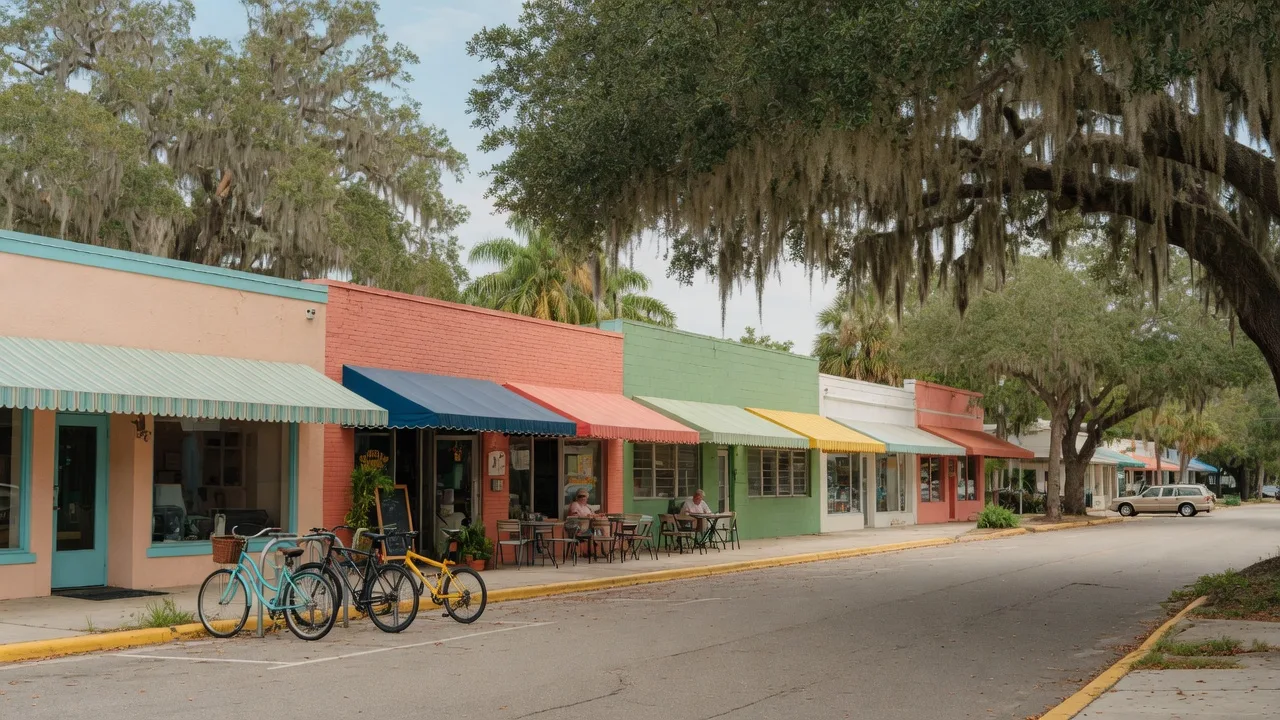
Audubon Park is a historic mid-century neighborhood in northeast Orlando, between Winter Park and Colonialtown on one side and downtown on the other. It developed in the 1950s and 1960s around the Orlando Air Force Base and, later, the Naval Training Center Orlando, according to Visit Orlando's Audubon Park profile and the neighborhood's published history. Residents describe it as a neighborhood under the oaks, a reference to the mature live oak canopy that shades the streets.
The commercial heart of the neighborhood is the Audubon Park Garden District, a shopping and dining district that operates under the City of Orlando's Main Streets program and has been recognized with the Great American Main Street Award, per the district's own materials and the City of Orlando. The district was also designated Central Florida's first Community Wildlife Habitat by the National Wildlife Federation, and Orlando's first Certified Wildlife Habitat community, an identity that shows up in the neighborhood's sustainability projects, including Fleet Farming, a program that converts residential lawns into small farm plots.
Corrine Drive: The Neighborhood Main Street
Corrine Drive is Audubon Park's main street, a walkable strip of independent shops, vintage stores, cafes, bakeries, and restaurants that runs between the neighborhood's residential streets. It is the kind of commercial corridor where residents run into neighbors at the coffee shop and where out-of-towners come for a meal and stay for the afternoon.
Businesses verified as operating as of October 2026 include Lobos Coffee Roasters at 3000 Corrine Dr., Coro Restaurant at 3022 Corrine Dr., The Salty Donut at 3025 Corrine Dr., Grazie Modern Italian Kitchen at 3101 Corrine Dr., Kelly's Homemade Ice Cream at 3114 Corrine Dr., Chiffon Culture Bakery Cafe at 3122 Corrine Dr., Foreigner Restaurant at 2816 Corrine Dr., and Lineage Coffee Roasting inside East End Market at 3201 Corrine Dr., among others. Menus, hours, and ownership change, so check each business directly.
The district also hosts a Monday evening farmers market from 6 to 10 p.m. in the Stardust Coffee parking lot, a long-running neighborhood tradition that combines local vendors, food, and live music, according to the Audubon Park Garden District. Stardust Video & Coffee, a neighborhood institution on Corrine Drive, anchors the market's corner.
East End Market
East End Market at 3201 Corrine Dr. is a two-story neighborhood market and culinary food hall that serves as the district's anchor. It houses local food artisans including Lineage Coffee, La Femme du Fromage, Olde Hearth Bread, Domu, Farm & Haus, WP Biscuit Company, and Hinckley's Meats, plus a bakery counter from Gideon's Bakehouse, according to the market's published vendor list. The building also includes an event space, demonstration and incubator kitchens, and retail, which makes it a working hub for Orlando's local food community rather than just a place to eat.
For relocating buyers, East End Market is a useful daily-life anchor: groceries, coffee, lunch, and dinner can all come from independent local businesses within a short walk of many Audubon Park homes. Hours and vendor lineups change, so check the market's current schedule before planning around it.
Parks and Green Space
The neighborhood's biggest green space is Harry P. Leu Gardens, a 50-acre city botanical garden at 1920 N. Forest Ave. on the shore of Lake Rowena, run by the City of Orlando. Harry P. Leu and his wife Mary Jane donated the estate to the city in 1961. The grounds include the Historic Leu House Museum, an 1888 Victorian-era home listed on the National Register of Historic Places, one of the South's notable camellia collections, one of Florida's largest formal rose gardens, more than 40 plant collections, a flower clock, and miles of paved walking trails, per the gardens' official site.
Blue Jacket Park, a City of Orlando park near the neighborhood's northern edge, adds athletic fields and open space, and Lake Sue sits nearby as part of the area's lake system. Audubon Park itself, the small park that gives the neighborhood its name, anchors the residential core. The Lake Living guide covers the region's lakes and waterfront considerations in more depth.
Housing Character
Housing in Audubon Park is predominantly older single-family homes, with bungalows, craftsman homes, and mid-century styles on small-to-mid city lots. Renovations are common, and some lots have been redeveloped with duplexes or new infill homes. New construction is limited and usually custom infill, so buyers should expect lot sizes and street frontages typical of a 1920s-era Orlando neighborhood rather than a new subdivision.
Because most homes date from the 1920s through the 1950s, buyers should budget for plumbing, electrical, roof, and HVAC updates, and expect a competitive market: Audubon Park is a sought-after in-town neighborhood, and well-priced homes can sell quickly. The Neighborhood Shortlist Workbook is a practical tool for comparing Audubon Park against other east Orlando neighborhoods before touring.
Getting Around
Corrine Drive connects the neighborhood to SR 50 (Colonial Drive) and Winter Park Road, while Mills Avenue and the SR 408 expressway are minutes away. SR 408's Corrine Drive interchange is the area's main highway access, with I-4 also close. The neighborhood is one of Orlando's more bikeable and walkable residential areas, and downtown is a short drive.
Drive times depend on traffic, route, and exact address. Depending on conditions, trips to downtown Orlando typically take about 10 to 15 minutes, the Walt Disney World area is roughly 25 to 35 minutes away, and Orlando International Airport (MCO) usually runs about 20 to 30 minutes.
Things to Consider Before Moving to Audubon Park
Older homes
Most homes date from the 1920s through the 1950s. Budget for plumbing, electrical, roof, and HVAC updates.
Street parking
Older neighborhoods have narrow streets and limited driveways. Parking is practical for most homes, but watch for multi-car households.
Popular and competitive
Audubon Park is a sought-after in-town neighborhood, and well-priced homes can sell quickly. Be ready to move fast.
Flood zones
Low-lying sections near area lakes and drainage can be in flood zones. Check FEMA designations for any specific property.
Nearby Communities and Related Guides
Frequently Asked Questions About Audubon Park
Is Audubon Park a city?
No. Audubon Park is a neighborhood within the City of Orlando in Orange County, in the 32803 ZIP code area between Winter Park, Colonialtown, and downtown.
What is the Audubon Park Garden District?
The Audubon Park Garden District is the neighborhood's shopping and dining district along Corrine Drive. It operates under the City of Orlando's Main Streets program, has been recognized with the Great American Main Street Award, and was designated Central Florida's first Community Wildlife Habitat by the National Wildlife Federation.
What is East End Market?
East End Market at 3201 Corrine Dr. is a two-story neighborhood market and culinary food hall with local vendors including Lineage Coffee, La Femme du Fromage, Olde Hearth Bread, Domu, Farm & Haus, WP Biscuit Company, and Hinckley's Meats, plus an event space and incubator kitchens.
When is the Audubon Park farmers market?
The Monday evening farmers market runs from 6 to 10 p.m. in the Stardust Coffee parking lot on Corrine Drive. Confirm the current schedule with the Audubon Park Garden District before visiting.
How far is Audubon Park from downtown Orlando?
Audubon Park sits east of downtown Orlando. Depending on traffic, trips typically take about 10 to 15 minutes by car, and SR 408's Corrine Drive interchange provides direct highway access.
Sources and Reporting
Facts on this page were checked against public sources in October 2026: Visit Orlando's Audubon Park profile; the Audubon Park Garden District's published materials; the City of Orlando Main Streets program; East End Market's vendor listings; the National Wildlife Federation's Community Wildlife Habitat registry and the Orlando Sentinel's coverage of the designation; Harry P. Leu Gardens' official site; and current local business listings for Corrine Drive. Market schedules, menus, business hours, and garden features change, so verify with the official source before planning around them.
Last updated: October 13, 2026 at 19:39 UTC. Published by Moving to Orlando Guide with Tyler Gibson.